In contemporary architecture, curved wood has become a defining feature of expressive, functional and sustainable design. From sweeping auditorium walls to sculptural ceilings in public buildings, the ability to shape timber into flowing forms allows architects to combine technical performance with visual warmth. In large-scale public and private projects – such as hospitals, schools, civic centres and corporate headquarters – curved wooden solutions deliver not only aesthetic impact but also acoustic comfort and durability.
As technical carpentry specialists, manufacturers must go beyond visual appeal. Curved systems must meet stringent fire regulations, acoustic standards and structural requirements. When designed and produced with precision, wood becomes a versatile material capable of adapting to complex geometries while maintaining its natural character and performance qualities.
Design Potential of Curved Wood in Contemporary Architecture
The architectural value of curved wood lies in its ability to soften spaces and create fluid transitions between surfaces. Straight lines often dominate large public buildings, but introducing curves into ceilings, walls or decorative panels transforms the user experience. In auditoriums, for example, curved wooden wall linings guide both sound waves and sightlines, improving acoustics while enhancing visual coherence.
In healthcare and educational environments, curved forms contribute to a more welcoming atmosphere. Organic shapes reduce the rigidity typically associated with institutional buildings, supporting wellbeing and comfort. Wood’s natural texture further reinforces this effect, bringing warmth to high-traffic interiors without compromising on resistance or ease of maintenance.
Moreover, curved solutions can be fully customised. Whether through slatted systems, perforated acoustic panels or decorative planks, timber can be engineered to adapt to convex or concave surfaces. This flexibility enables architects to maintain their original design intent, even in complex refurbishment projects or large-scale new builds where structural constraints might otherwise limit creativity.
Technical Performance and Applications of Curved Wood Systems
Beyond its aesthetic appeal, curved wood plays a critical role in meeting the functional demands of public architecture. Acoustic optimisation is one of the main drivers behind its specification. Curved acoustic panels help distribute and absorb sound more evenly, reducing reverberation times in theatres, conference halls and municipal chambers. When combined with perforation patterns and acoustic backing materials, wooden systems can achieve outstanding sound absorption ratings.
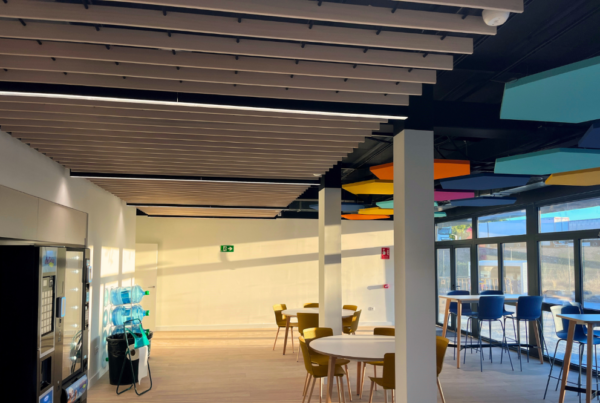
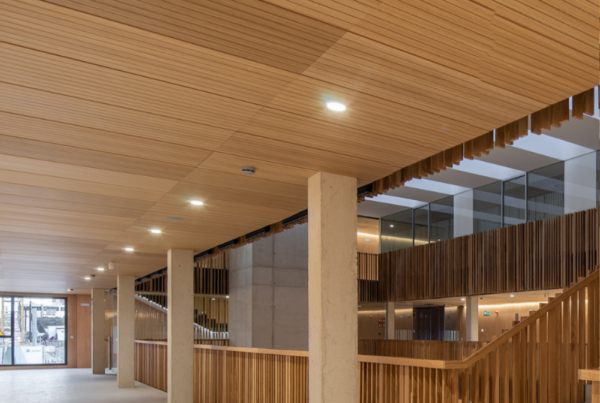
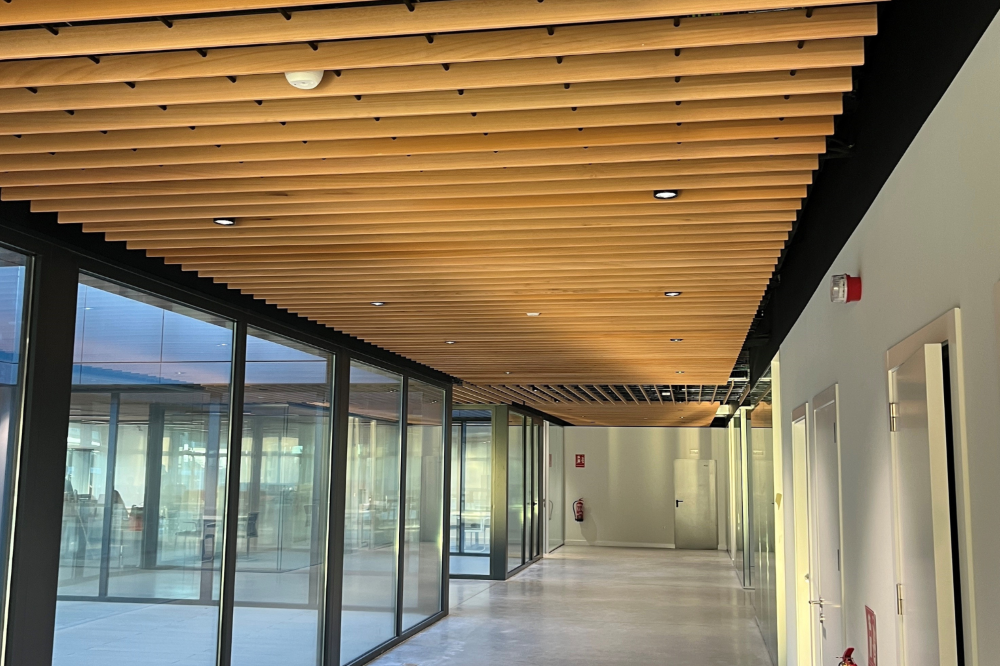
Ceilings are another key application. Curved wooden false ceilings allow architects to conceal services while creating dynamic overhead landscapes. In large atriums or sports facilities, these solutions can follow the building’s structural rhythm, enhancing spatial continuity. The integration of lighting, ventilation and inspection panels is carefully planned to maintain both performance and visual harmony.
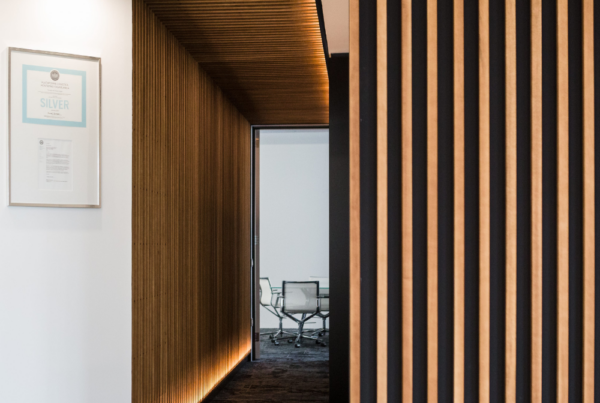
Decorative wall cladding and slatted systems also benefit from curved configurations. Timber slats can be installed along radiused substructures, generating continuous lines that visually elongate corridors or emphasise focal points within a space. In corporate offices or cultural venues, this approach reinforces brand identity through distinctive architectural language.
Importantly, all these systems must comply with strict European standards regarding fire reaction, structural stability and environmental sustainability. High-quality engineered wood products ensure dimensional stability even when shaped into curves, while certified finishes and treatments guarantee long-term durability. For public procurement projects, this technical reliability is as important as the visual result.
SpigoGroup: Advanced Curved Wood Solutions for Public and Private Projects
At SpigoGroup, we specialise in technical carpentry solutions that transform architectural concepts into reality. Our expertise spans acoustic panels, wooden false ceilings, slatted systems, decorative panels, technical doors and sports furniture, all designed for demanding environments such as auditoriums, hospitals, schools, sports centres and corporate offices.
Our approach to curved wood is based on precision engineering and bespoke manufacturing. Each project is developed in close collaboration with architects and contractors to ensure that every curve, radius and junction is perfectly executed. Whether integrating acoustic requirements, fire-rated specifications or complex installation conditions, our systems are tailored to meet both aesthetic and regulatory expectations.
Through innovation, craftsmanship and technical knowledge, SpigoGroup delivers wooden solutions that elevate large-scale architecture. By combining performance, sustainability and design flexibility, we help create inspiring spaces where curved wood becomes not just a feature, but a defining element of the built environment.