

The acoustic conditioning of a theatre is essential to achieve the sound quality desired by the public that attends the performance of a play, a musical or a concert. The factors that influence the acoustics of a room are many but, perhaps, the first and most important are its size and shape, since both factors determine how sound propagates in space and how it is perceived by listeners.
Firstly, the size of the theatre directly influences the reverberation time, which is the time it takes for the sound to dissipate after being emitted. In larger spaces, it takes longer for sound to reach surfaces and return to the listener, which can cause excessive reverberation. Conversely, in smaller spaces, sound can dissipate too quickly, reducing tonal richness.
The shape of the theatre is equally important. Geometric shapes affect the direction and distribution of sound. For example, curved surfaces can focus sound in certain areas, creating “hot spots” or areas where the sound is more intense. Flat, parallel surfaces, on the other hand, can generate echoes or “standing waves” that distort the clarity of sound. Horseshoe or fan-shaped stage space designs are often ideal for their ability to distribute sound evenly.
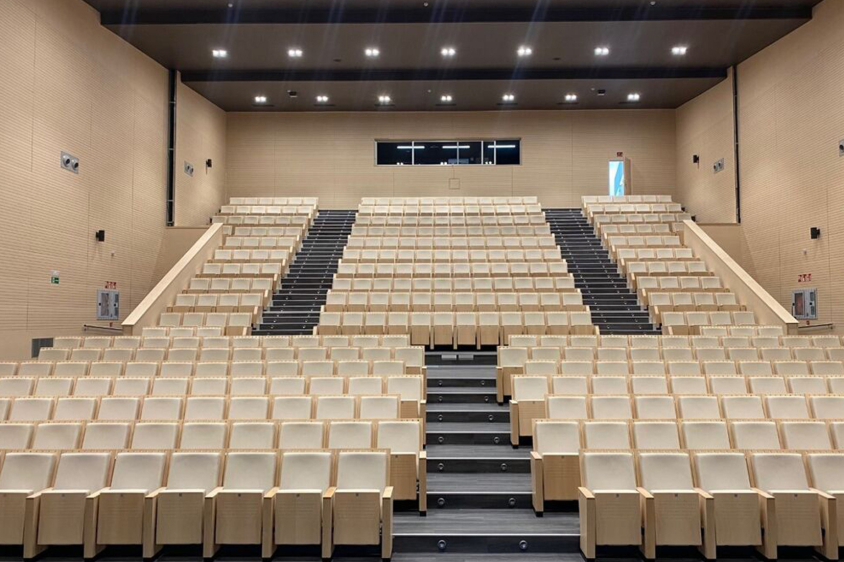
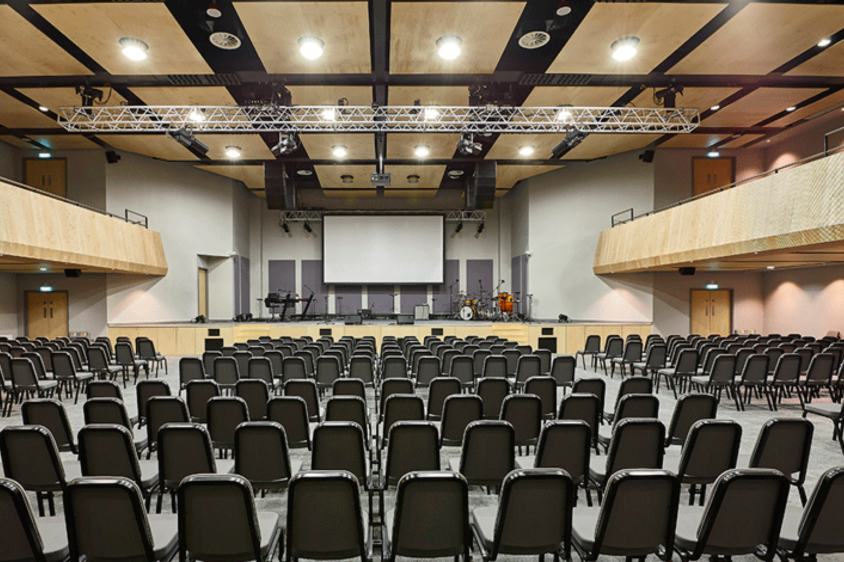
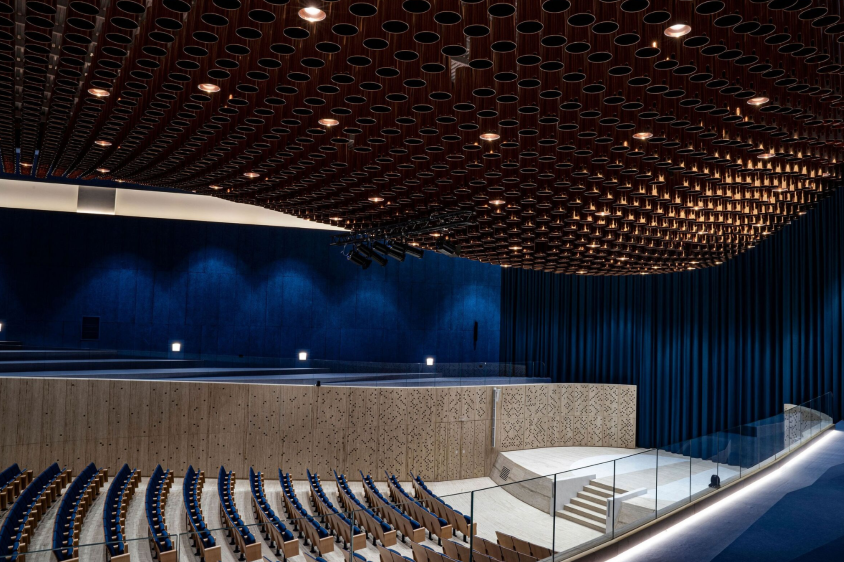
The way to guarantee the correct acoustic conditioning of a theatre is the use of acoustic panels, such as those manufactured by Spigo, which help control the reflection and absorption of sound and manage to regulate the reverberation of a space, providing it with optimal acoustics.
Click on the link to learn more about some of our acoustic conditioning projects.
If you liked this post about acoustic conditioning of a theatre, you may also be interested in:
– Acoustic conditioning for restaurants, bars and cafes, is it really necessary?
– Acoustic ceiling tiles, why choose them made of wood?
– 6 Reasons to install PET decorative wood slats
– Why install wood acoustic ceilings in offices?


