馃崻
Skip to main content

New online tool for price quotes for acoustic panels, wood ceilings, technical doors, etc.

By Acoustics, Architecture, Construction, Decoration, News, Spigogroup wood projects No Comments
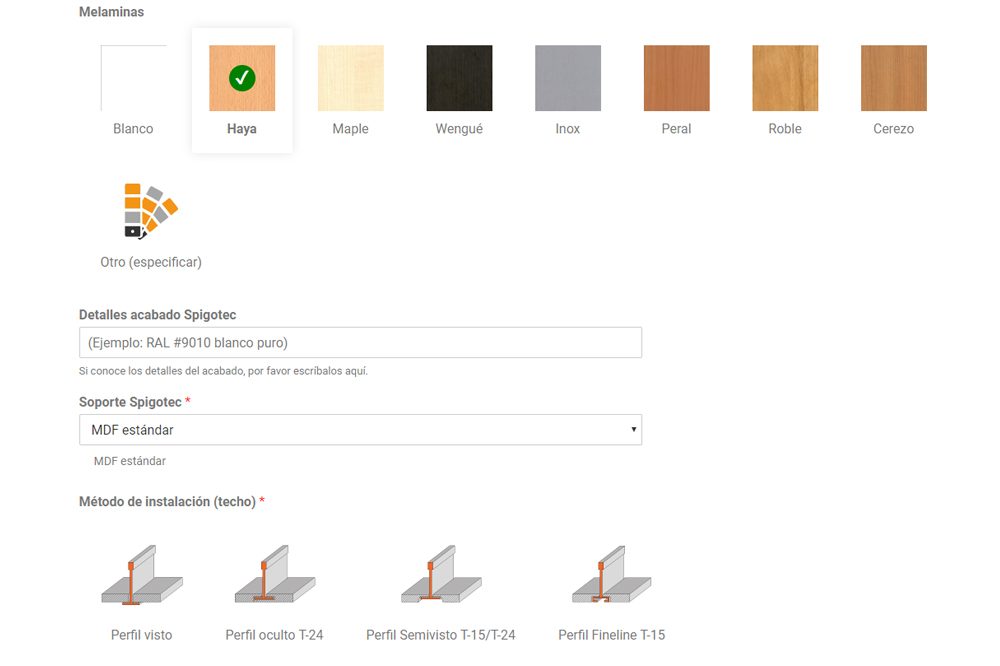
Every day we receive requests for prices of acoustic panels, wood ceilings, phenolic cabins, technical doors or any other of our branded products. When the contact is made by phone or chat we can complete the consultation quite quickly. They are means which provide instant feedback. On the other hand, when an architect or builder contacts us via email or using a form, the process takes a little longer. Some key data is almost always missing. It seems inevitable. Our catalogues include many options and it is very rare for a client to know all the details that must be decided when asking for a quote. We have launched a new online tool to make it easier to request prices of acoustic panels, removable ceilings, false wood ceilings or any other product. It is a simple, yet very complete form, which Spigogroup clients can use to request a quote for any of our Spigoacustic, Spigotec, Spigoline, Spigocompac or Spigodoor products. The form takes you, one step at a time, through all the information necessary to complete the request. Once it is finished, it is sent to our sales department, where they will have all the necessary details to prepare and quickly and efficiently send the requested quote. When you need a quote for you project鈥檚 acoustic doors, if you want to know how much cladding with wood slats can cost, or if you are going to start an acoustic conditioning job and you need the price of wood acoustic panels, try our new online quote request tool.     GET A QUOTATION   . If you liked this post about prices of acoustic panels, you may also be interested in: . - Materials for acoustic conditioning: Is wood a good choice? - Five acoustic conditioning websites that you should visit if you want to know a little more about this topic - Wood sound-absorbing materials: choices and formats for different projects - New Spigogroup wood solutions catalogues
Read More

Acoustic materials that also improve the final appearance of your project

By Acoustics, Architecture, Construction, Decoration, News, Spigogroup wood projects No Comments
The use of acoustic materials is widespread. The better the acoustic conditions in a building where you spend most of the day, the more demanding you become. One always hopes to find an acoustic environment free of reverberation. You would like your conversations to be heard clearly without the need to increase the volume of your words. Therefore, when you approach a construction, renovation or decoration project, you no longer think only of thermal comfort, but also of creating an acoustically pleasant environment. But it's not worth sacrificing the aesthetics of the final result in the process. So, more and more, acoustic conditioning is chosen, using acoustic materials which, like those made of wood, bring beauty and elegance from a visual point of view. The key to these acoustic materials is that they should not seem to fulfil a technical purpose. Solutions such as the Spigoline acoustic systems made with wood slats are simply beautiful. But, at the same time, their perforated upper support fulfils a sound-absorbing function that helps control reverberation in the room. Other acoustic solutions, such as the Spigotec and Spigoacustic acoustic panels create warm settings and help to convey an image of distinction, while also improving the acoustics of the room. The function of the Spigoart acoustic pictures is undetectable and they just seem to be purely decorative elements. This is also the case of Spigodoor acoustic doors. They are simply modern, robust and beautiful wooden doors. No one would suspect that they are responsible, along with the wood panelling in acoustic ceilings and walls, for the excellent acoustics in the room.   . If you liked this post about acoustic materials, you may also be interested in: . - Materials for acoustic conditioning: Is wood a good choice? - Spigogroup wall and ceiling panels: brands and characteristics - Wood sound-absorbing materials: choices and formats for different projects - Acoustic diffusers with wood slats for the acoustic conditioning of large spaces
Read More

Ceiling and wall cladding with solid wood slats: the case of Centro de Formaci贸n Canario

By Acoustics, Architecture, Construction, Decoration, News, Spigogroup wood projects No Comments
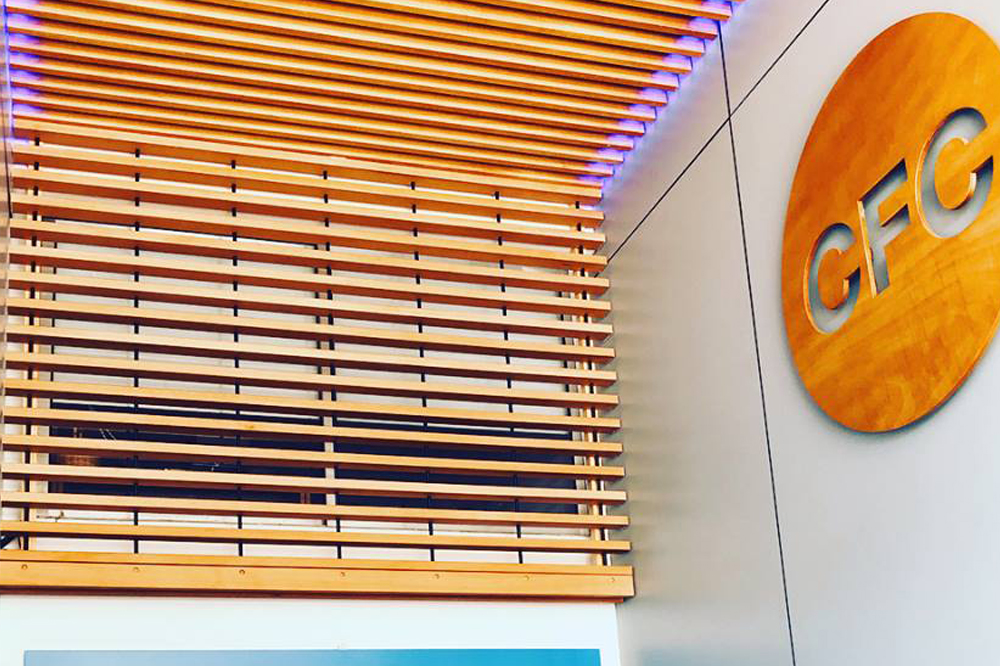
Ceiling and wall cladding can be very discreet, go unnoticed and fulfil only the most basic function: to cover and hide what is behind it. At other times, simple ceiling and wall cladding can add a touch of design, nuances of modernity, games of light and shadows and sensations of warmth, order and serenity. The work of architects and interior designers stands out in the small details: those well thought-out finishes, the materials and finishes chosen, a vision of the whole project that makes the final result so special. That is how SAL | Studio Architecture Lanzarote works and that is undoubtedly what they were thinking when they commissioned us to supply 20 m虏 of ceiling and wall cladding made with solid wood slats to bring the headquarters of Centro de Formaci贸n Canario up to date. A quality detail that would serve to receive visitors in an original and elegant way. The Grid 4-30-70-35 model of the Spigoline wood slat decorative panel system was chosen. The model consists of four, 30 mm wide and 70 mm high slats with 55 mm spacing, forming a grid with black rods. The grids are 340 mm wide and 2100 mm long, and are installed with fastening clips. Solid obeche wood with oak stain was chosen as finish for the wood wall cladding and false ceiling. This is the result:   . If you liked this post about wall cladding, you may also be interested in: . - The 7 advantages of using wood panelling in your project interiors - Go Hasegawa and the use of wood panelling for walls and ceilings - Wood panelling in wineries: 6 examples - The 7 advantages of using wood panelling in your project interiors
Read More

How to interpret the nomenclature of Spigoacustic sound-absorbing panels

By Acoustics, Architecture, Construction, Decoration, News No Comments
Spigoacustic sound-absorbing panels decorate walls and ceilings of all types of premises: auditoriums, hotel halls, exhibition halls, university classrooms, hospital waiting rooms, dining rooms, board and meeting rooms, professional offices, etc. They are a sound-absorbing material that architects and decorators normally use for acoustic conditioning. We talk about those decorative acoustic panels, made of wood, easily recognisable for their grooved surface and the quality transmitted by the various finishes available. There are about 30 models of Spigoacustic absorbent tiles that offer different levels of acoustic absorption. Depending on the amount of sound we need to neutralise to correct problems such as acoustic reverberation, we will choose one model or another. Therefore, in the technical descriptions of construction or renovation projects the installation of specific models of Spigoacustic acoustic panels is requested. The technical nomenclature of each model includes three numbers, which correspond to three measurements in millimetres. The first is the width of the groove on the visible side. The second is the distance between perforations on the hidden side of the panel. And the third is the distance between grooves on the visible side. According to these indications we can distinguish between models with groove widths of 2, 2.8 and 4 mm, with distances between holse of 16 or 32 mm (or without holes), and with distances between grooves of 8, 16, 32 or 64 mm.   More information available in the Spigoacustic acoustic panels catalogue   . If you liked this post about sound-absorbing panels, you may also be interested in:   - Materials for acoustic conditioning: Is wood a good choice? - How to choose wood acoustic tiles for your project? - Sound-absorbing materials: choices and formats for different projects - Acoustic diffusers with wood slats for the acoustic conditioning of large spaces
Read More