🍪
Skip to main content

New trends in office design: Open Space, better acoustics and more wood

By Acoustics, Architecture, Construction, Decoration, News, Spigogroup wood projects No Comments

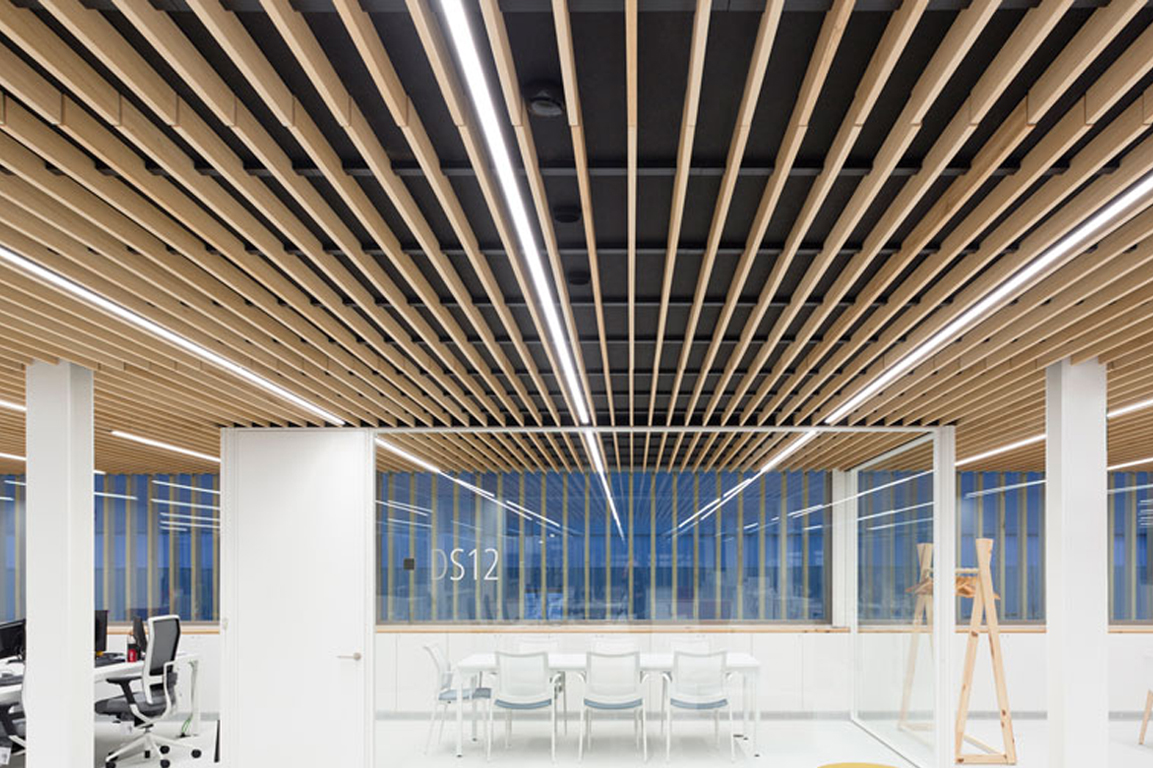
Office design evolves along with business formats and working models. Now, more than ever, employees are the focus of any organization when considering the design of a workplace. The goal? To ensure the well-being of employees, retain talent and, of course, improve productivity. These are some of the trends that, at present, define the form of office design: Open space Concept: This model proposes an office design with very flexible open spaces, which offer different areas for meetings or interaction according to the needs of each moment and totally replace the traditional private or individual workspaces. This creates greater closeness among employees, encourages creativity and, according to some studies, can lead to an improvement in the productivity of administrative staff by up to 20%. The importance of acoustics: Ensuring proper acoustic conditioning is more important than ever. Installing acoustic panels and acoustic tiles that seek a cleaner, crisper sound helps to achieve good communication among employees. The use of elements such as acoustic ceilings or acoustic doors is combined with the implementation of other measures such as the reduction of alarming sounds to avoid shocks and distractions by putting mobile phones in silent or vibration mode. More wood: Wood is the warmest and most sustainable material available for office design. It is supplied as wood tiles or wood slats in inner linings for walls and ceilings, in addition to being used, as always, in floors and furniture.       If you liked this post about office design, you may also be interested in: – Office ceilings that improve the look and acoustics of a workplace – The three types of office doors made of wood most commonly used today – Accessible ceilings for smart offices: sensorization, big data and the dilemmas we face from technological development – Eight frequently asked questions about acoustic solutions for offices

Read More

Types of wood and finishes in Spigogroup acoustic panels

By Acoustics, Architecture, Construction, Decoration, Grand Master, News No Comments

When we talk about the types of wood used to manufacture acoustic panels, we have to distinguish the two parts of a panel in which they can be used: the core and the finish. Core: The core is the base on which the wood acoustic tiles are built and it is not visible. It is usually made of plywood or, particularly, MDF (medium density fibreboard). Actually, MDF is not exactly wood, but rather a product derived from wood, combining wood fibre with synthetic resins to achieve a higher density. Finishes: The finish is a much thinner layer that is visible on the acoustic panel, and it is placed on the core. Finishes can be made of melamine, through-dyed MDF, HPL, lacquer or natural wood veneer. A finish in natural wood veneer allows us to enjoy the aspect of the different types of wood in existence. Following is a review of the more common types of wood and the characteristics that define them in a general way, although some are almost imperceptible as a natural finish in acoustic tiles. There are other woods and wood finishing options that Spigogroup can include in its acoustic panels, but always as special orders.   Beech: It offers clear, almost whitish shades, and it is very abundant thanks to sustainable forest holdings. It has a straight, fine fibre and a uniform grain. It is a heavy wood, above 710 kg/m3, and medium hard.           Oak: next to pine, it is the most popular among all types of wood. Its colour varies from light brown to dark shades. It is resistant and relatively dense: between 700-770 kg/m3 with a humidity level of 12%. It has a straight fibre and medium grain, and offers good moisture resistance.           Maple: It is highly appreciated for its light colour. It has straight grain, so it is easy to work. In addition, it has good resistance to deformation, torsion, shock and wear.             Cherry: It is a very decorative reddish wood with very characteristic veining. Its fibre is straight and the grain varies from fine to very fine. It is also very easy to work.             Birch: It ranges from light yellowish white to soft orange shades. It is a very fine wood used in woodworking. It has straight fibre and a fine grain, and has a very uniform appearance.             Iroko: This is a tropical wood native to Africa well known for its resistance. Its grain and a colour, between yellow and brown, are highly appreciated. It is not cheap due to a shortage caused by uncontrolled farming.             Walnut: It is one of the most highly appreciated types of wood and its price is high, as the tree grows very slowly. It ranges from light brown to dark chocolate brown and it is considered a medium heavy wood (around 650 kg/m3). It has coarse grain and a straight fibre.           Melis pine: It is a light brown to reddish brown and quite heavy. It is a very straight fibre and medium grain, qualifying as medium hard or hard.           If you liked this post about types of wood, you may also be interested in: – The 3 possible contributions of decorative acoustic panels for the aesthetics of a Project – 5 Reasons why you should use obeche wood slats in your Project – Spigoline doubles the number of items in its catalogue of wood slat panels – Acoustic panels with natural wood veneer: many more options than you thought    

Read More

Spigogroup acoustic panels are E1 acoustic panels. What does that mean?

By Acoustics, Architecture, Construction, News No Comments

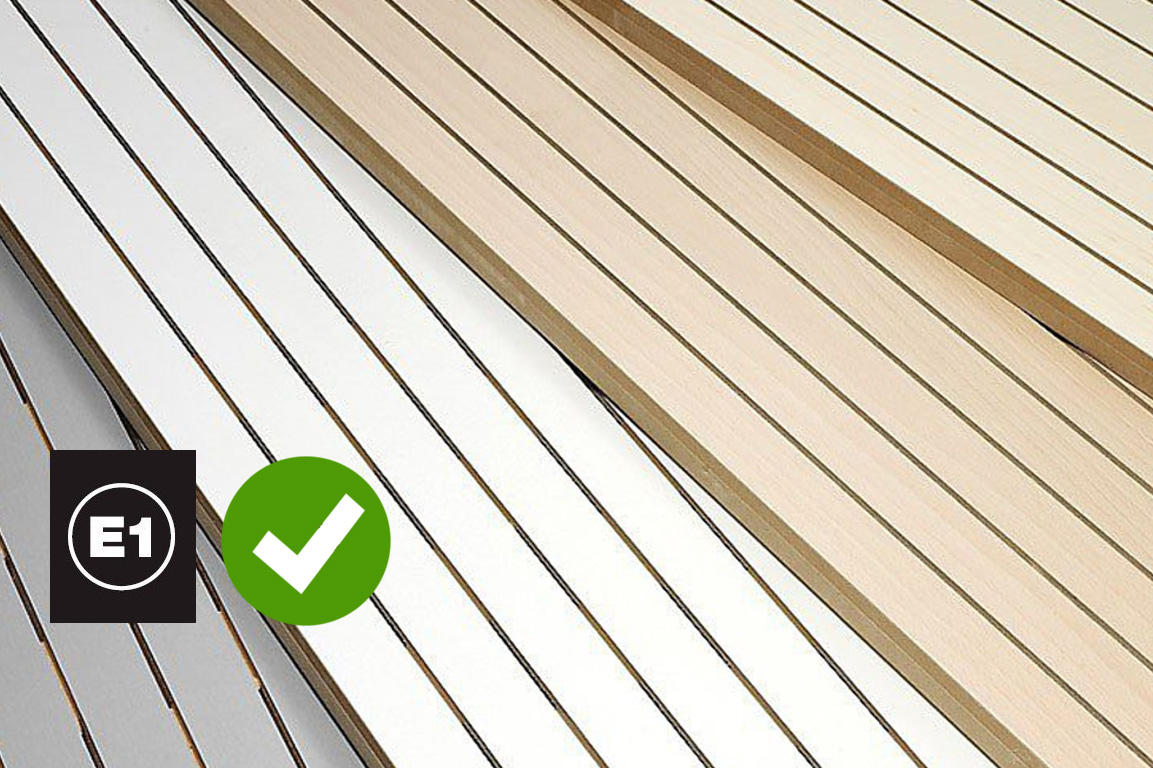
All sound-absorbent wood panels in the Spigogroup catalogues are E1 acoustic panels. This is very important and we explain why. Formaldehyde is a chemical compound used for the formulation of synthetic resins and adhesives, often employed in the manufacture of boards derived from wood such as plywood and medium density fibreboard or MDF. The problem is that formaldehyde is continuously emitted by a board throughout its life and it has been linked to an increased risk of cancer in humans. To control product emissions of formaldehyde, there is a European standard, EN 13986, which classifies the boards as E1 (emissions equal to or less than 3.5 mg/m²h) and E2 (emissions greater than 3.5 mg/m²h) depending on the milligrams of formaldehyde released per hour and per square metre of board. The manufacturing basis of Spigogroup wood panels is medium density fibreboard or MDF, a material made from compacted wood fibres that are combined with waxes and resins and subjected to high temperature pressing processes. These boards can also receive flame retardant treatments to offer an improved reaction to fire or water-repellent treatments to adapt their use to humid environments. The medium density or MDF fibre boards that Spigogroup uses in its inner linings and acoustic panels have very low formaldehyde emissions. Therefore, Spigogroup acoustic panels also have very low formaldehyde emissions and fall into the E1 class. This means that Spigogroup E1 acoustic panels are suitable for use in interiors in public and community buildings, homes and workplaces, and meet emission levels required by current regulations and most construction and decoration projects. In the case of more demanding projects we can also manufacture E0 acoustic panels with zero or near-zero formaldehyde emissions.   If you liked this post about E1 acoustic panels, you may also be interested in:   – PEFC or FSC wood panelling What’s that? – 6 reasons to install a wood false ceiling in a room – The best 25 articles written about wood slats – New online tool for price quotes for acoustic panels, wood ceilings, technical doors, etc.

Read More

Using slats on a wall can definitely change the final look of your project

By Acoustics, Architecture, Construction, Decoration, News, Spigogroup wood projects No Comments

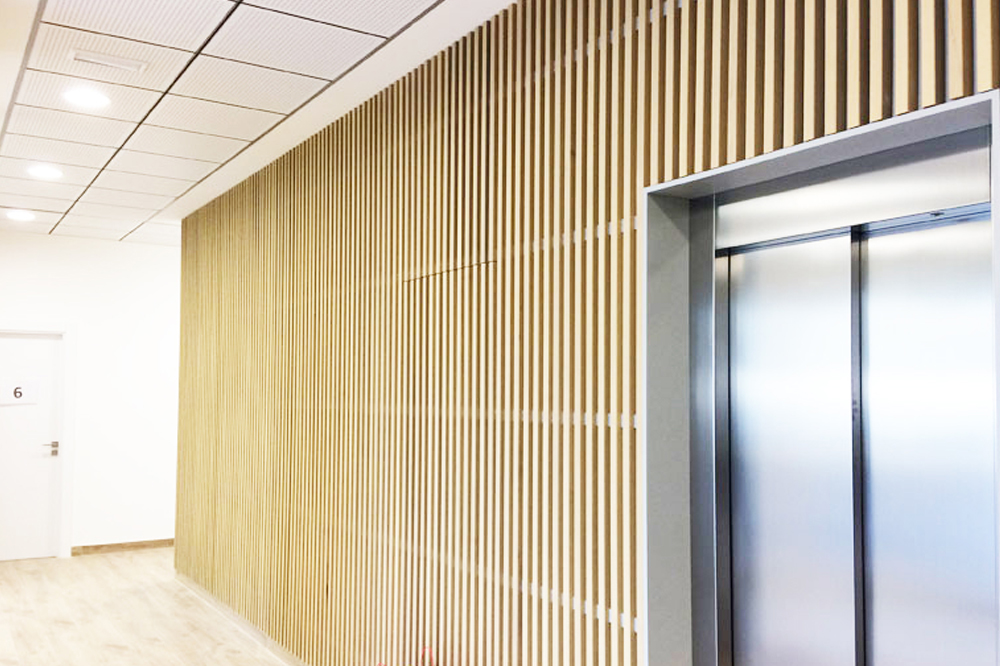
Something as simple as using slats on a wall can change the look of a room. And when the room is an office or workplace, it can also change the impression caused by the business it hosts. For example, using cladding consisting of wood slats on walls is a decision that completely changes the final result of the décor and interior design project. The American architect, designer and film director Charles Eames once explained: “One could describe Design as a plan for arranging elements to accomplish a particular purpose.” Using wood slats on a wall is therefore a design action that pursues the exhibition in certain places of vertical elements of a quality natural material, such as wood, with the intention of providing modernity and warmth to a project. On the one hand, installing slats on a wall transforms the space. It brings verticality and order, and changes the visual perspective of a room. In a hotel reception or company foyer, the use of wood slats transfers the feeling of seriousness and serenity to the visitor, of being in a place where everything is under control to assure the best experience. Opting for wood slats also offers warmth and harmony with nature, and gives a greater sense of closeness between people who work in the company and visitors or customers who make use of its facilities and services. .       . SEE MORE PROJECTS WITH WOOD SLATS . If you liked this post about slats on a wall, you may also be interested in: – The beauty of the suspended boards and wood slats on ceilings and walls at the lobby of the Hotel Hotel in Canberra, ACT, Australia – Curved wood slats for spectacular design ceilings – Wood slats for wineries: Marqués de Vargas – Spigoline doubles the number of items in its catalogue of wood slat panels  

Read More