🍪
Skip to main content

European wood acoustic panels; Is wood from European forests better?

By Acoustics, Architecture, Construction, Decoration, News, Spigogroup wood projects, Uncategorized No Comments

European wood acoustic panels? Is wood from European forests better? Why? Some customers ask us about where we source the wood used to manufacture our acoustic panels and wood cladding. This is a detail that is becoming increasingly important, not only because of a commitment to the use of European products, but also because of the advantages this brings from the point of view of sustainability. The wood we use at Spigogroup is mostly of European provenance, because our main wood suppliers source their raw material from European forests:   This means a reduction in transport costs compared to timber from further afield, as well as a significant reduction in the transport-related carbon footprint.   Moreover, using European wood is a commitment to local products, which helps to generate employment and economic growth in our area.   Finally, we have to bear in mind that using European timber promotes the increase of forest area dedicated to sustainable forest management, which benefits the environment.   In addition, all the wood that arrives at our facilities is PEFC or FSC certified. The adoption of these stamps also prevents the use and promotion of illegally cut timber. These certifications guarantee that the wood used comes from sustainably managed forests and that the wood panel has also been prepared by a manufacturer who guarantees that a PEFC or FSC chain of custody system is maintained right through to the end product.           If you liked this post about european wood acoustic panels, you may also be interested in:   – The best lead times when buying wood slat cladding – 3 benefits of using wood wall cladding in a room – Wood and energy efficiency, why do they go so well together? – Sustainable wood cladding, more than just a fad    
Read More

Wood acoustic panels combined with rock wool – Sound Absorption Data

By Acoustics, Architecture, Construction, Decoration, News No Comments

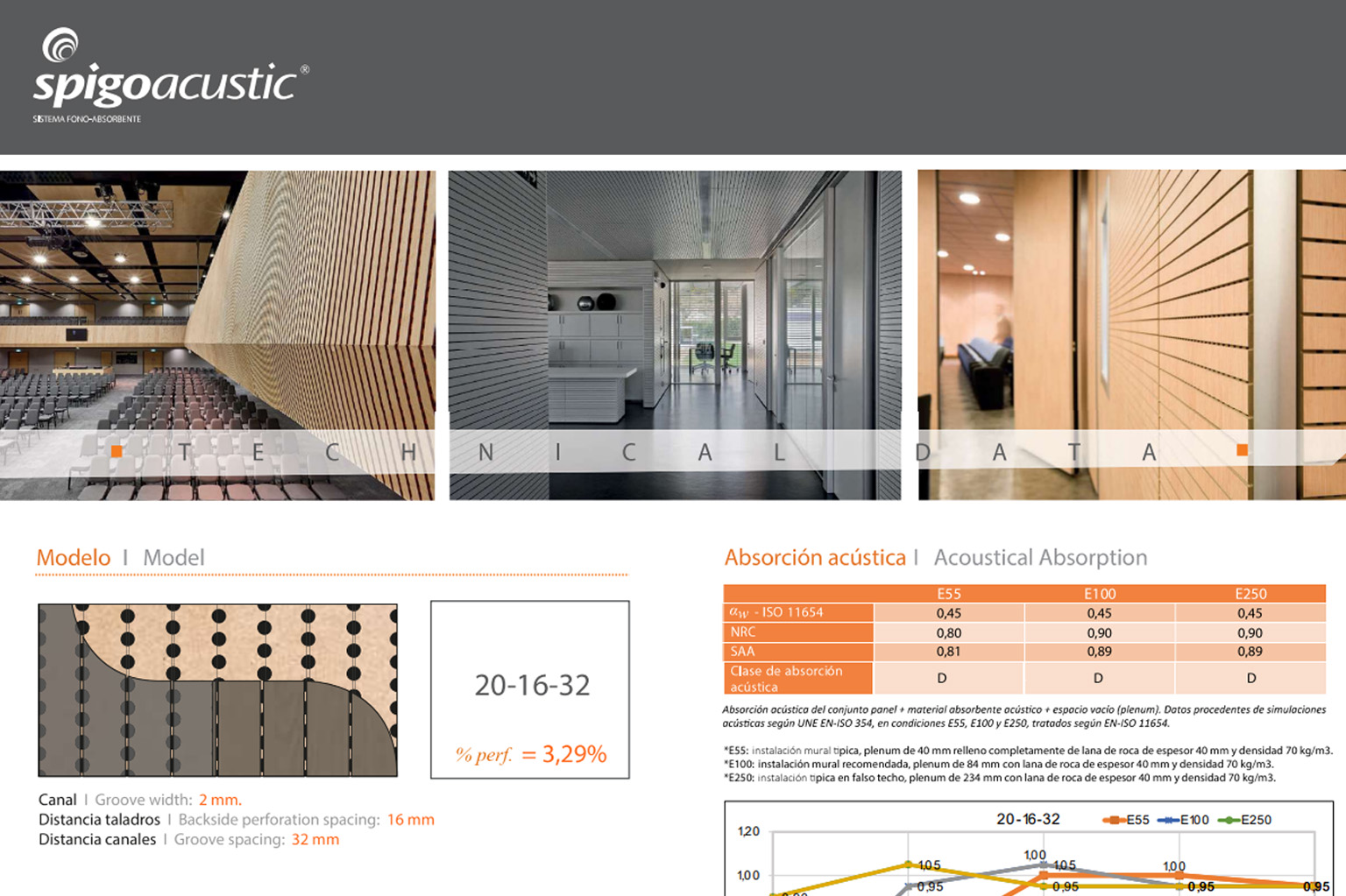
The combined installation of wood acoustic panels and rock wool achieves significant improvements in acoustics. Wood acoustic panels, such as those manufactured by Spigotec or Spigoacustic, are designed to be able to define and control the sound that bounces off and absorbs the wall or ceiling where they are installed. This way, acoustic conditioning tasks can be undertaken in order to avoid annoying sound disturbances such as reverberation. These acoustic panels have perforations of different sizes on their surface that add up to a total area capable of absorbing sound and preventing uncontrolled bouncing of sound waves. The amount of absorbed sound, measured and specified according to the perforation percentage of each panel, is deadened by a veil or other type of sound-absorbent material in the plenum behind the wood acoustic panel. The technical specifications of Spigoacustic acoustic panels also provide data on the sound absorption provided by each model, combined with rock wool type insulation, in three scenarios from acoustic simulations according to UNE EN-ISO 354 and treated according to EN-ISO 11654: E55: typical wall installation, 55 mm thick, with 16 mm acoustic panel and 40 mm plenum completely filled with 40 mm thick rock wool, with a density of 70 kg/m³. E100: recommended wall installation, 100 mm thick, with 16 mm acoustic panel and 84 mm plenum completely filled with 40 mm thick rock wool, with a density of 70 kg/m³. E250: typical false ceiling installation, 250 mm thick, with 16 mm acoustic panel and 234 mm plenum completely filled with 40 mm thick rock wool, with a density of 70 kg/m³.     If you liked this post about wood acoustic panels and rock wool, you may also be interested in:   – The benefits of acoustic conditioning in hospitals – Acoustic ceilings with wood slats: the case of Cajasiete Tenerife – How to distinguish good wood acoustic panels? – Acoustics and decoration in white: white acoustic panels and much more    

Read More

How we used decorative wood cladding at Bodegas Olarra

By Architecture, Construction, Decoration, Inspiration, News, Spigogroup wood projects No Comments

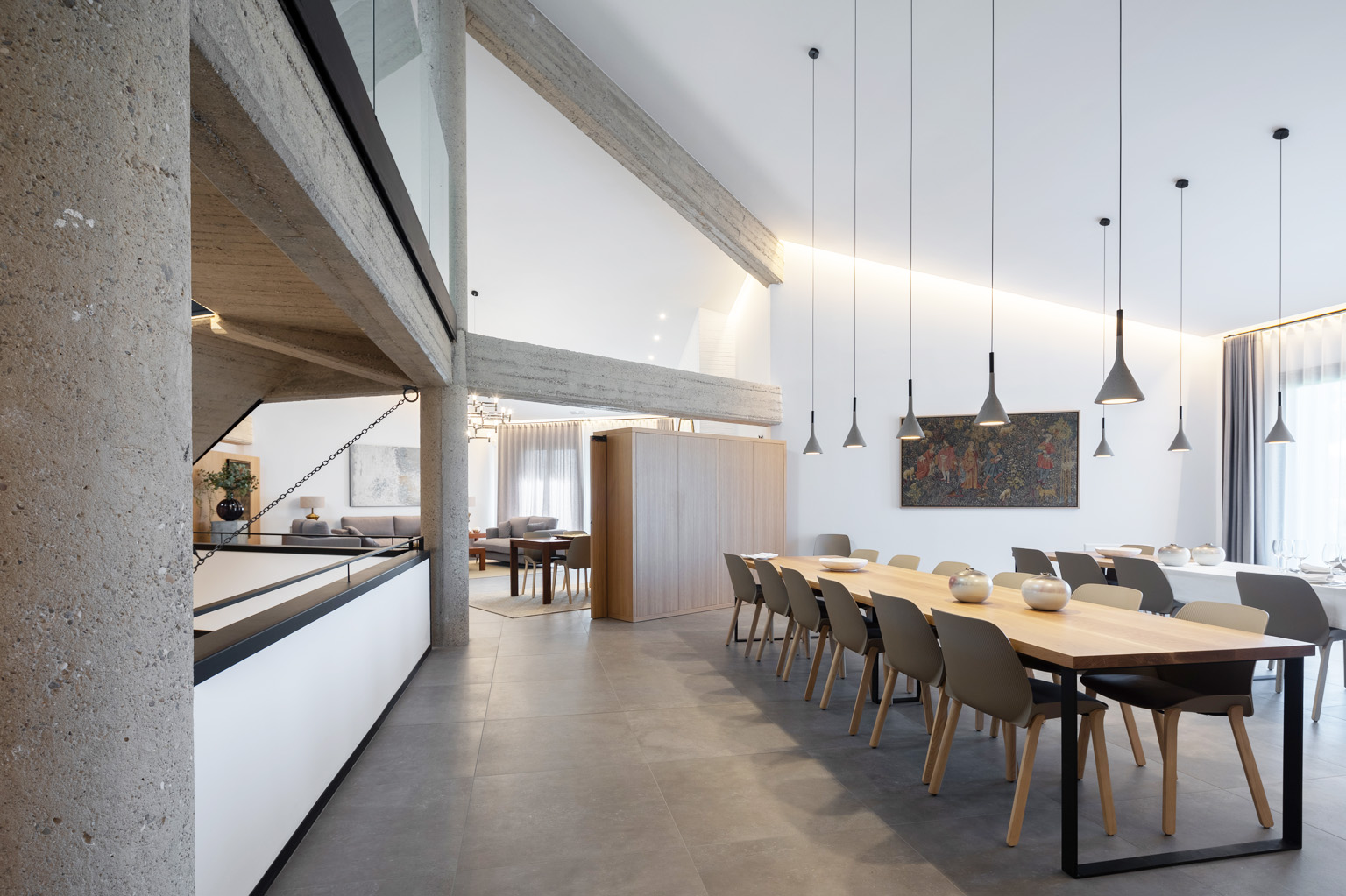
Decorative wood cladding has the function of transferring Ethe aesthetic benefits of wood to some other surface, object or room. This was the case in this particular project. When, just over a year ago, the Rioja-based decorator Carmen Fernández invited us to participate in the remodelling project of the central hexagonal area of Bodegas Olarra, we felt the responsibility of being able to do our bit for this iconic building, one of the clearest examples of the so-called Wine Architecture. Designed in 1973 by the architect Juan Antonio Ridruejo, it constitutes a veritable treatise on architecture applied to the winemaking process, featuring a barrel room with 111 hexagonal domes, specifically designed to prevent sudden temperature changes. It was our turn to intervene in the heart of the building. In addition to interiorwood cladding in the wine bar area, we carried out some bespoke carpentry work, including decorative wood cladding in other parts of the premises. We designed and manufactured special table tops in solid oak wood and produced shelves in 30 mm natural varnished oak veneer, placed on metal structures. We also designed and manufactured bespoke partitioning furniture in varnished oak veneered wood between rooms. The result was excellent. In a building that maintains its almost metre and a half thick concrete walls, the appearance of small touches of solid wood reinforces the open, cheerful and receptive character of this unique winery in Logroño.           If you liked this post about decorative wood cladding, you may also be interested in:   – Wood slat false ceilings for wineries: the case of Bodegas Mauro – San Román Bodegas – 3 Examples of solid wood slats in winery decoration – Project in wood and winery technical doors for Bodegas Piérola and Hotel FyA – Fitted acoustic panels. The case of Bodegas Barón de Ley      

Read More

The benefits of acoustic conditioning in hospitals

By Acoustics, Architecture, Construction, Decoration, Spigogroup wood projects No Comments

The benefits of acoustic conditioning in hospitals are undisputed. Every year, a new study confirms the negative effects of noise pollution on people’s health and the importance of providing maximum acoustic comfort in homes, businesses and community service buildings. So, it makes sense that the best acoustics should be provided in those places where people’s health is protected and restored. If we look at the users of a hospital, we find that good acoustic conditioning benefits everyone. On the one hand, the most important users: the patients. Noise and some annoying sound distortions, such as reverberation, reduce sick people’s ability to recover. On the other hand, an atmosphere of quiet and tranquillity improves sleep quality, speeds up recovery, reduces re-hospitalisations and even helps lower the need for medication. The healthcare staff is undoubtedly another major beneficiary of good acoustic conditioning in a hospital. Having reverberation controlled by acoustic panels ensures good communication between doctors, nurses and assistants, which brings down the rate of medical errors and increases the efficiency of healthcare workers. Furthermore, good acoustics mean you don’t have to force your voice and raise your pitch, thereby reducing fatigue and stress. Visitors and companions are the other major beneficiaries when acoustic conditioning also reaches the common areas, waiting rooms, canteens or offices of a clinic or hospital, reducing the anxiety of waiting and helping to manage the news they receive about their sick loved ones.       If you liked this post about acoustic conditioning in hospitals, you may also be interested in:   – Acoustic ceilings with wood slats: the case of Cajasiete Tenerife – Acoustics and decoration in white: white acoustic panels and much more – Three wood panels used in the acoustic conditioning of auditoriums – Acoustic conditioning for videoconferencing rooms, is it necessary?  

Read More