🍪
Skip to main content

Spigogroup’s Spigoline brand A+ wood slat cladding

By Acoustics, Architecture, Construction, Decoration, News No Comments

Spigogroup manufactures, and markets A+ wood slat cladding under its brand name, Spigoline. What does this label mean? What advantages does it offer? A+ is a widely-used, volatile substances emission or air quality label. It is commonly found in France, and guarantees that Spigoline solid obeche wood slats do not emit significant amounts of harmful chemicals such as formaldehyde, acetaldehyde, toluene, xylene, styrene, tetrachloroethylene, ethylbenzene, butoxyethanol, trimethylbenzene and dichlorobenzene. All products in the Spigoline catalogue have an A+ rating, the highest certification for indoor air quality, according to UNE-EN ISO 16000. This eco-label is very important, as it certifies that a product, such as Spigoline solid wood slat cladding, has passed the strictest VOC (Volatile Organic Compound) emission tests according to the ISO 16000 standard, and assures that a product is safe and its use does not pose any health or environmental hazard. These certifications, together with the installation safety offered by a material as light and easy to machine as obeche wood, make Spigoline wood slat cladding the ideal choice for any project that wants to enjoy the elegance and warmth of wood while ensuring a healthy and wholesome environment. In addition, Spigoline employs obeche wood from regulated, sustainable plantations that guarantee an environmentally-friendly source. Finally, choosing Spigoline with an A+ label can also help achieve sustainable building certificates such as BREEAM, LEED, WELL and Passivhaus.         If you liked this post about A+ wood slat cladding, you may also be interested in:   – FSC/PEFC wood acoustic panels: Why are they more environmentally-friendly? – How to quickly and easily get the price of any acoustic panels and wood cladding you may need – What is the fire performance of Spigogroup’s B-s1-d0 wood acoustic panels? – Wood acoustic panels combined with rock wool – Sound Absorption Data    
Read More

Workplace acoustics with flexible, multi-purpose spaces

By Acoustics, Architecture, Construction, Decoration, News No Comments

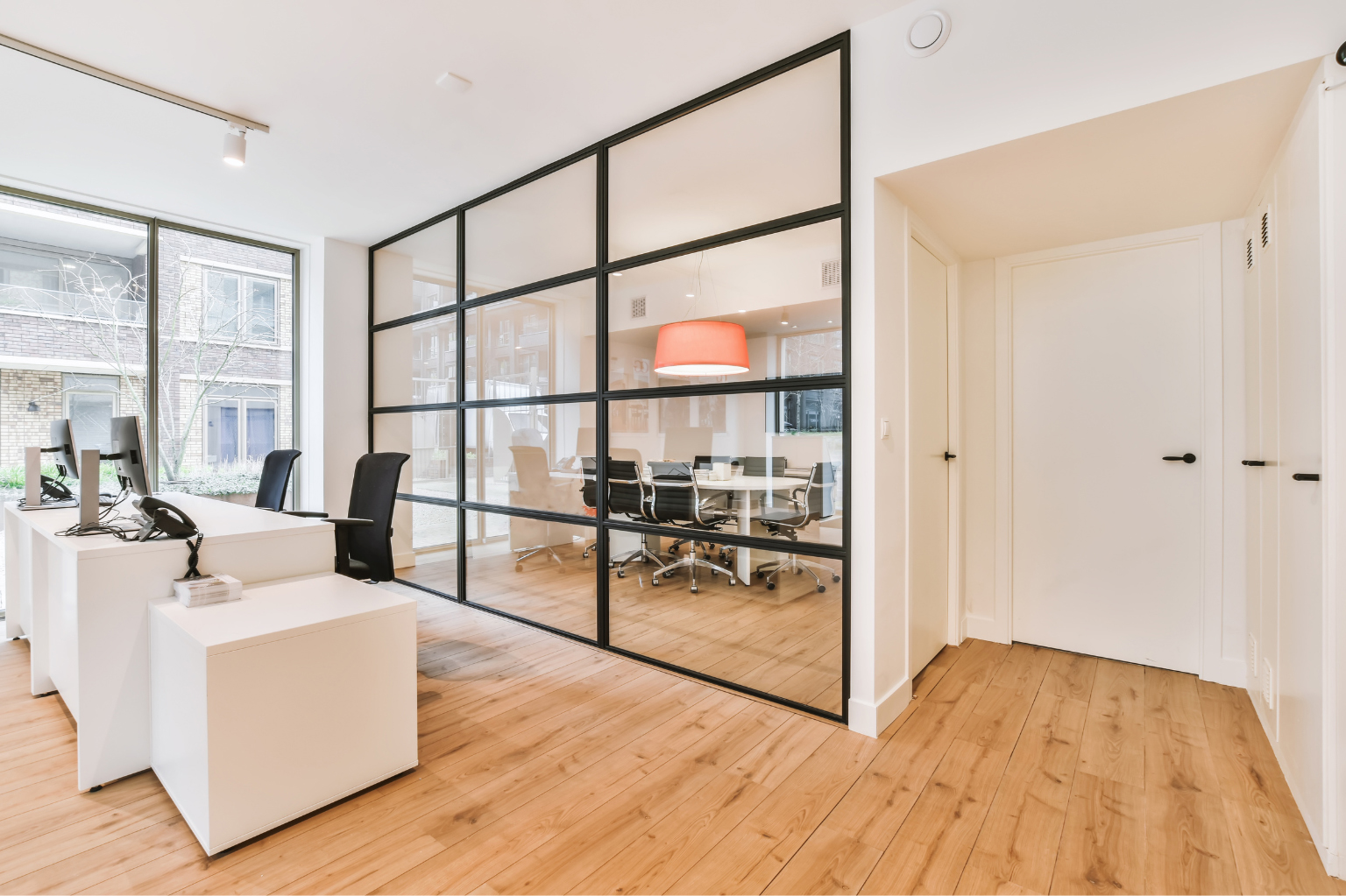
Workplace acoustics with flexible, multi-purpose spaces is an area to consider when, as an architect or interior designer, you are faced with the challenge of designing these rooms. The concept of the office is changing and, particularly since the pandemic, it has become much more elastic and adaptable to the circumstances of the moment. Teleworking, coworking formulas, a need for versatility and a need to adapt to high growth rates have made a dent in the appearance and distribution of workspaces. Where we used to have fixed spaces occupied by people who came on the same days and at the same times to occupy the same desks, now we have flexible spaces delimited by moveable, portable elements that help reconfigure the shape, surface area and seating capacity of each space according to the use we want to make of it. This new feature of offices and workplaces makes the total acoustic conditioning of these spaces more necessary than ever. Now, a room that had good acoustics, where we did not think it was necessary to intervene can, in seconds, be transformed into a space with acoustic issues due to a change in size, the addition of walls of different materials or the reduction or increase of its seating capacity. New workplaces require a comprehensive study of their acoustics, including all possible uses. They then need to be fitted with acoustic panels, such as those offered in the Spigoacustic, Spigotec and Spigoline catalogues, to help deal with potential issues.         If you liked this post about workplace acoustics, you may also be interested in:   – FSC/PEFC wood acoustic panels: Why are they more environmentally-friendly? – How to quickly and easily get the price of any acoustic panels and wood cladding you may need – Tongue and groove system for installing acoustic panels on walls – Acoustic panels for theatres: the new Espacio Escénico Ciudad de Maracena      

Read More

Wood slat panels for office ceiling and wall decoration

By Acoustics, Architecture, Construction, Decoration No Comments

Wood slat panels are a widely-used resource when decorating offices. They bring the warmth and elegance of wood, making workplaces more comfortable and welcoming. They are very easy to install. It is no longer strange to visit a modern office, with large, bright, spacious rooms, delimited by light-coloured walls that help the light spread, and suddenly find a wall or ceiling made of wood slats. These wood slats are not laid one by one, but are installed in panels or grids that bring them together in groups of between 2 and 8 slats per grid. This makes it much easier and quicker to install and to cover large areas quickly and cleanly. The main reason for the use of this resource is aesthetics, but it can also be used for acoustic conditioning. This is the case with the Spigoline Acoustic Wood slat System, in which solid wood slats of square or rectangular cross-sections are laid parallel to each other and perpendicular to an acoustic upper support with oblong or circular perforations. Spigoline brand wood slat cladding features 70 different models divided into three main families. In addition to the Acoustic System, which we have already discussed (see models), Spigoline has the Grid System (see models), parallel solid wood slats and joined with wood rods, and the Lineal System (see models), rectangular section MDF wood slats placed parallel and joined by cross wood slats.         If you liked this post about wood slat panels, you may also be interested in:   – 8 frequently asked questions about the use of wood slats in decoration – The best lead times when buying wood slat cladding – Spigoline adds 18 new wood slat cladding models to its catalogue – Wood slat false ceilings for wineries: the case of Bodegas Mauro – San Román Bodegas      

Read More

FSC/PEFC wood acoustic panels: Why are they more environmentally-friendly?

By Acoustics, Architecture, Construction, Decoration, News No Comments

The Spigogroup acoustic solutions catalogue offers FSC/PEFC wood acoustic panels. What do these acronyms stand for and what advantages do they offer? FSC (Forest Stewardship Councils) and PEFC (Programme for the Endorsement of Forest Certification) are two labels that certify that wood comes from sustainably-managed forests. These same seals, applied to a product, such as the Spigoacustic and Spigotec brand wood acoustic panels, guarantee that it was manufactured from sustainably-sourced wood and that, in addition, a PEFC or FSC Chain of Custody System was maintained through to the end product. The use of FSC- and PEFC-certified wood acoustic panels offers a number of key advantages:   It guarantees that the wood and hence, the acoustic panels made with it, are sourced sustainably, respecting nature, the environment and people.   It demonstrates and underlines Spigogroup’s commitment to protecting the environment and developing sustainable and environmentally-friendly industries.   It helps to meet the requirements of the new Spanish Technical Building Code which, from 31 December 2020, aims to minimise the environmental impacts associated with building materials.   It contributes to the reduction of a project’s carbon footprint. Wood has a negative carbon footprint, and there is no other building material that allows us to reduce the carbon footprint of a building more significantly. Wood outperforms other materials in CO2 emissions, effect on water quality and overall environmental impact when measured over the full life cycle of the material.       If you liked this post about FSC/PEFC wood acoustic panels, you may also be interested in:   – Acoustic panels for theatres: the new Espacio Escénico Ciudad de Maracena – European wood acoustic panels; Is wood from European forests better? – How to distinguish good wood acoustic panels? – Acoustics and decoration in white: white acoustic panels and much more    

Read More