🍪
Skip to main content

Acoustic conditioning of classrooms: calculation of reverberation time and recommendations

By Acoustics, Architecture, Construction, Decoration, Inspiration, News No Comments

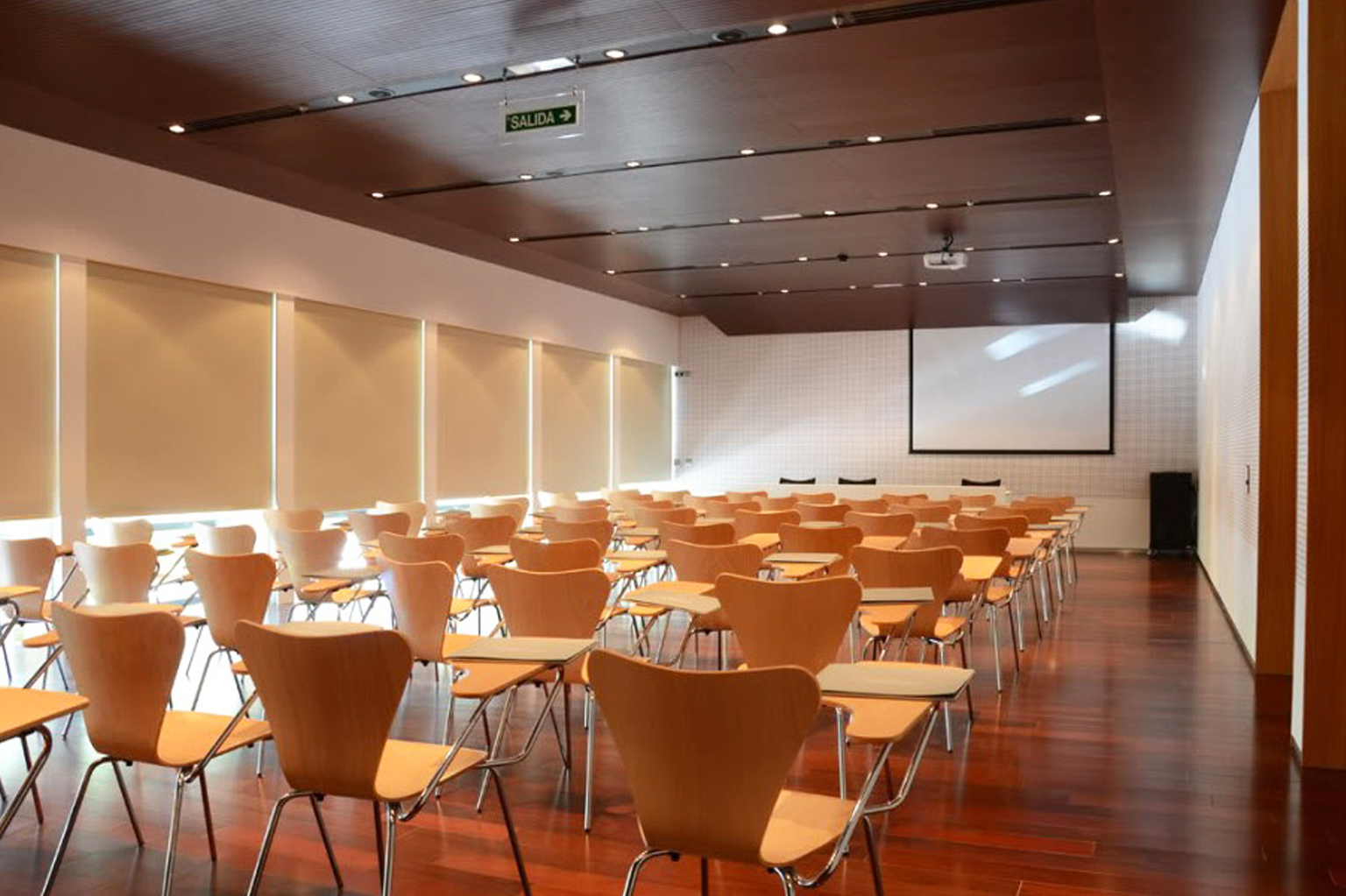
The acoustic conditioning of classrooms is key to correcting reverberation and achieving good acoustics that ensure the intelligibility of the speaker’s words and, therefore, that the message being delivered is properly understood. When undertaking the acoustic conditioning of a classroom, we have to follow the indications given by the Spanish Technical Building Code (CTE), the regulatory framework that sets the basic quality requirements that buildings must meet. The Code’s Basic Document for Noise Protection (DB HR), determines that reverberation time T (s) is calculated using the formula:   T= 0,16 V / A V = volume of the enclosure (m³) A = total sound absorption of the enclosure (m²)   The way to correct reverberation time is to adjust the total sound absorption of the room by using sound-absorbent acoustic panels, such as those manufactured by Spigogroup. In the design of classrooms up to 350 m³, DB HR makes the following recommendations:   Cubic enclosures or enclosures with side-to-side ratios that are whole numbers should be avoided. Distribution of absorbent materials. Options: 1.- Sound-absorbent material throughout the entire ceiling surface, reflective front wall and sound-absorbent rear wall. 2.- Sound-absorbent material at the back ceiling only, leaving a 3 m wide band of reflective material at the front. The front wall should be reflective and the rear wall should have sound-absorbent material with a sound absorption coefficient similar to that of the ceiling. For equal values of total sound absorption of the elements that make up the enclosure, it is more advisable to have one central aisle instead of two side aisles for pupil access.         If you liked this post about acoustic conditioning of classrooms, you may also be interested in:     – What are micro-perforated acoustic panels? How many models are there? – Acoustic panels for Lezkairu Health Centre – The relationship between architectural acoustics and luxury – Spigogroup extends its acoustic panels outlet with new models          

Read More

What are micro-perforated acoustic panels? How many models are there?

By Acoustics, Architecture, Construction, Decoration, Spigogroup wood projects No Comments

Micro-perforated acoustic panels are widely used for acoustic conditioning in interior spaces. Spigotec or Spigoacustic wood acoustic tiles include these, which have the smallest perforations and are therefore the most discreet. Just like slotted perforation acoustic panels, round-hole perforated acoustic panels and square hole acoustic panels, they have the ability to absorb sound, so they are perfect when it comes to controlling reverberation in a room. Put simply, this is how they work: acoustic tiles have a number of perforations on their surface that allow sound to pass through to a black 0.25 mm sound-absorbent veil. Depending on the percentage of the panel surface that is perforated, the panel absorbs more or less sound. Finally, we only need to choose the panel that has the sound absorption capacity we need to balance out noise effects, such as reverberation. Spigotec’s catalog features nine models of micro-perforated acoustic panels ranging from the modelo Micro T2 model with 0.68 % of its surface perforated to the Micro T16 model with 11.80 % of its surface perforated. If required, Spigotec can also modify and adapt any of these models to the specific acoustic requirements of each project. All can be used with melamine, natural wood, lacquered or HPL finishes, on standard, fire-retardant or water-repellent MDF supports. Installation is very simple and can be done with exposed profile, fineline T15, semi-exposed T15/T24 or concealed T24 systems for ceilings, and dovetailed or Omega+Grapa profile systems for walls.   SEE MODELS                         If you liked this post about micro-perforated acoustic panels, you may also be interested in:   – Slotted or oblong perforated acoustic panels – Round-hole perforated acoustic panels – Square hole acoustic panels – Spigotec models – The benefits of using wood panels in Passivhaus-certified projects    

Read More

Acoustic panels for Lezkairu Health Centre

By Acoustics, Architecture, Construction, Decoration No Comments

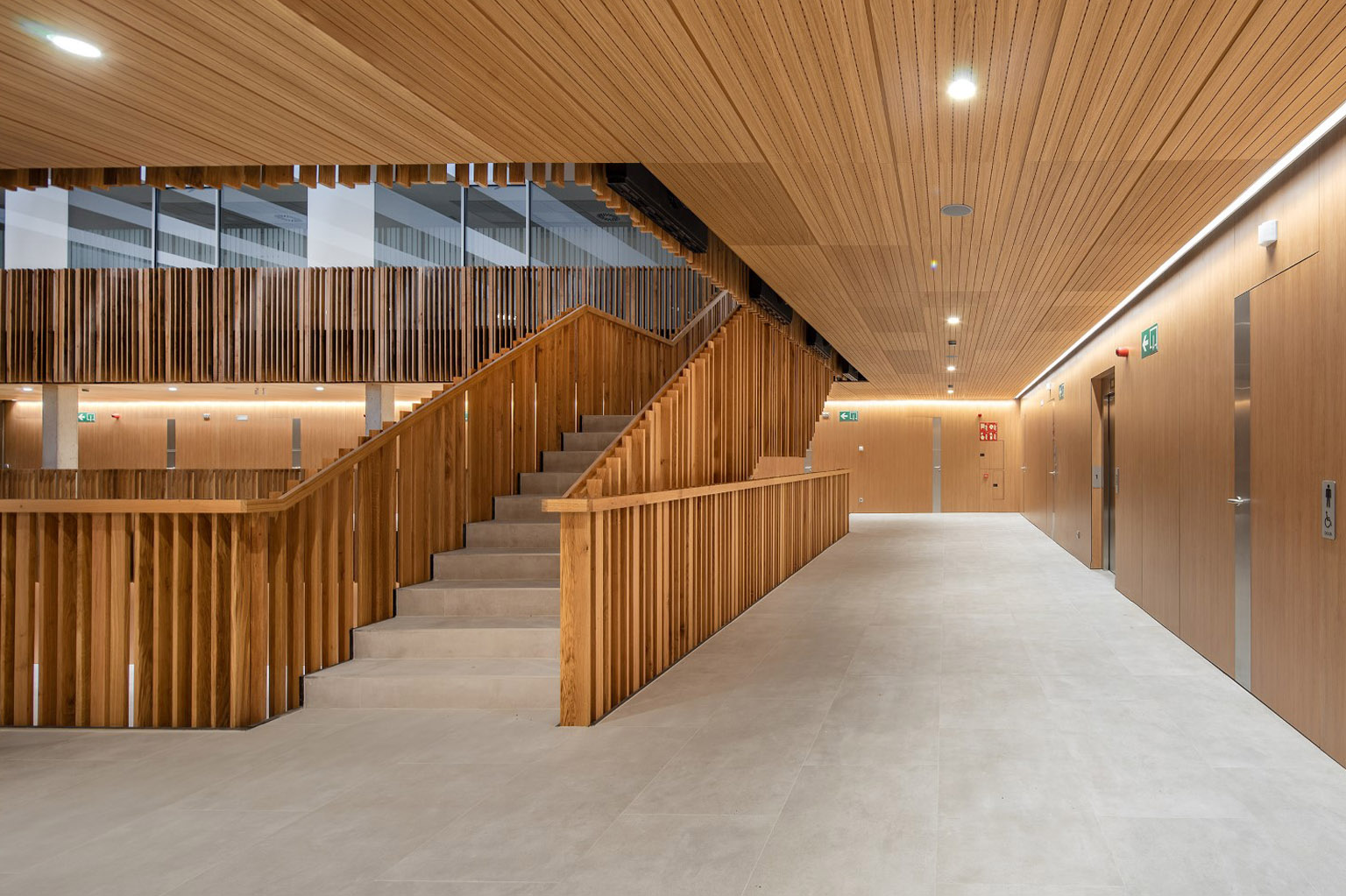
Having already assumed that good acoustics is one of the pillars of people’s health and well-being, it makes sense to use acoustic panels for health care facilities. Every day, healthcare buildings receive hundreds of people with different ailments and, just as we take care of the ambient temperature and the hygienic conditions of the building, we must also take care of acoustic comfort inside the building. There are 8.500 family medicine and paediatrics patients in the Lezkairu district of Pamplona who are beneficiaries of this project. From the end of 2022, they will make use of this new health centre, a near zero energy building with A energy rating, designed by the architectural studio Alonso Hernández y Asociados and built by Dragados. The use of wood as the main material for the interior cladding of walls and ceilings is a solid proposal, seeking the elegance and warmth that only this primitive material can bring to a space. Two types of wood acoustic panels were installed:   approximately 920 m² of 1200×600 cm Spigoacustic 42-32-64 acoustic panels, with wood effect varnished oak veneered finish on 16 mm fireproof MDF Bs1,d0, with T15 half-hidden profile mounting system.   approximately 560 m² of 600×600 cm Spigoacustic 42-NO-32 acoustic tiles, with white melamine finish on 16 mm fireproof MDF Bs1,d0, with T15 half-hidden profile mounting system.   The aesthetic result, as can be seen in the excellent images by photographer Josema Cutillas, is spectacular.             If you liked this post about acoustic panels for health care facilities, you may also be interested in:   – The benefits of using wood panels in Passivhaus-certified projects – Acoustic panels in maple finish: 3 good examples of their use – Wood and health: 5 benefits of wood for your health – Workplace acoustics with flexible, multi-purpose spaces      

Read More

The benefits of using wood panels in Passivhaus-certified projects

By Architecture, Construction, News No Comments

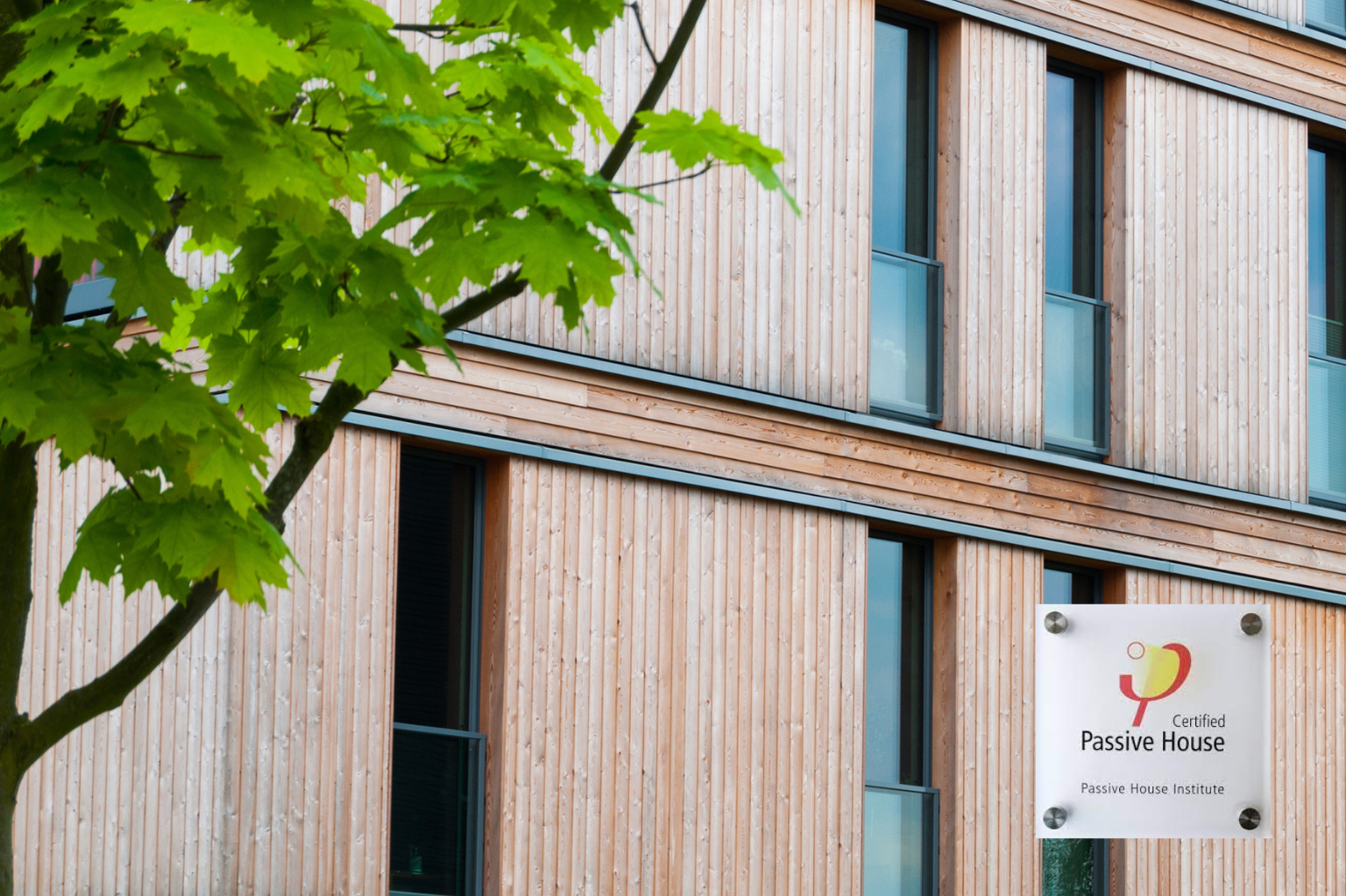
Wood panels and Passivhaus are two terms that we often hear or read in the same sentence. Passivhaus aims to reduce the energy consumption of buildings by approximately 70% compared to those built to conventional standards, and the constructive advantages of wood reinforce Passivhaus in this goal. The same applies to projects with other labels related to sustainable architecture and construction: nearly-zero-energy buildings (NZEC), bio-construction, zero-energy buildings, sustainable architecture, green architecture, bioclimatic architecture, organic architecture, and more. The key lies in the fact that using wood in Passivhaus projects makes it possible to take the low energy demand requirement to the whole construction process, while constructing or manufacturing the building, during its life and operation, and on its environmental impact.   During the construction process wood makes it possible to opt for locally sourced or zero km material, speeding up processes and reducing transport. It can also be prefabricated and requires less energy for processing, handling and assembly.   In the lifetime of the building it helps to reduce energy consumption because it is an excellent natural thermal insulator that facilitates the elimination of thermal bridges. It also helps to regulate air quality and temperature because it is able to absorb and release moisture from the air, providing a healthy, comfortable indoor environment.   With regard to its environmental impact, it is a material in whose manufacture hardly any CO2 emissions are generated. Wood is a carbon sink and can be grown in a sustainable and certifiable way. It is also 100% recyclable and fully participates in circular models.         If you liked this post about wood panels and Passivhaus, you may also be interested in:   – 5 reasons to use wood if you want to earn BREEAM certification – Spigoacustic and Spigotec A+ wood acoustic panels – Wood and health: 5 benefits of wood for your health – Wood acoustic panels combined with rock wool – Sound Absorption Data        

Read More